
Choosing the Right Drywall Profile: Which Thickness Should Be Used in Which Project?
Correct Drywall Profile Selection: Which Thickness for Which Project?
In modern construction, drywall applications are indispensable for providing both aesthetic and functional solutions. The success of a project depends not only on the quality of the gypsum board but also on the correct selection of the frame system—the drywall profiles—that support it. As HC Drywall Profile, we manufacture high-standard galvanized steel profiles that extend the lifespan of buildings and ensure ease of application. Choosing the right profile is critical for resistance against vibrations, sound insulation performance, and preventing surface cracks. In this guide, we detail which thickness and type of profile you should use according to different project types.
Why Material Thickness Matters and What Standards Represent
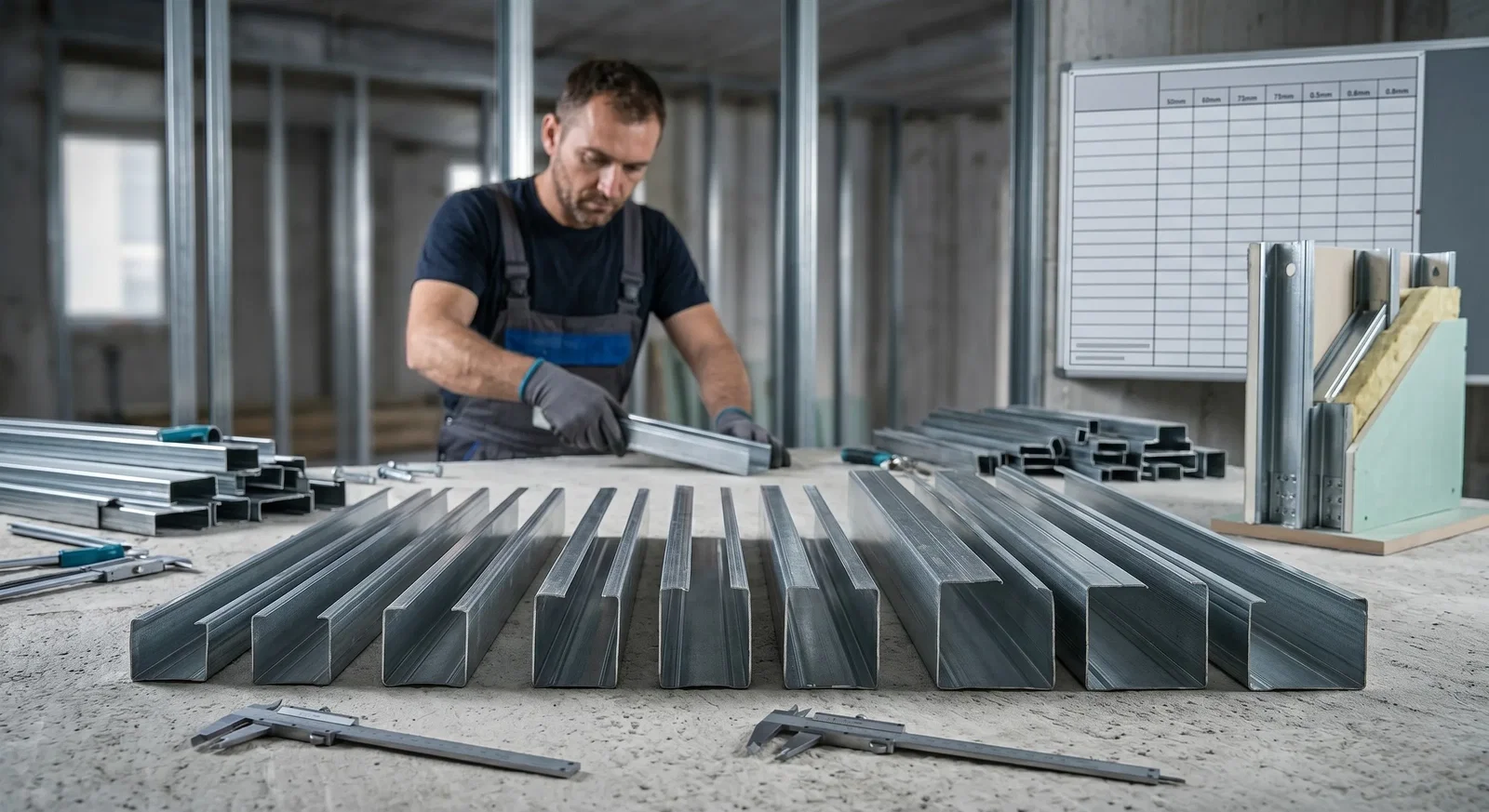
Thickness in drywall profiles is the fundamental factor determining the system's load-bearing capacity and its resistance to physical factors like wind and structural loads. In the market, various wall thicknesses are available, starting from 0.30 mm up to 0.60 mm and above. Productions compliant with standards within the HC Drywall Profile range ensure full alignment with your project's static calculations. Thin profiles are generally preferred for decorative ceilings that do not bear weight, whereas for high partition walls or surfaces to be covered with heavy ceramics, using thicker (0.50 - 0.60 mm) profiles is a necessity. Incorrect thickness selection can lead to issues that are difficult to rectify, such as wall flexing over time or ceiling sagging.
Dynamics of C-Stud and U-Track in Partition Wall Systems
Partition wall applications are systems that divide a space while providing sound and heat insulation. In these systems, "C-Studs" are used as vertical carriers, and "U-Tracks" are used as floor and ceiling fixers. As the wall height increases, the profile wall thickness must be increased to reduce oscillation caused by wind load and dead weight. For example, in walls exceeding 3 meters, opting for HC profiles with a minimum thickness of 0.50 mm or 0.60 mm instead of 0.40 mm guarantees the rigidity of the wall. Additionally, if heavy loads like cabinets or radiators are to be hung on the profiles, the thickness and profile spacing in those areas must be specially planned.
Ceiling C and Ceiling U Profile Selection in Suspended Ceiling Applications
Suspended ceilings are installed for aesthetic appearance as well as for concealing installations and acoustic regulation. Safety comes first in ceiling systems. HC Ceiling C (TC) and Ceiling U (TU) profiles must have the capacity to carry the ceiling's own weight and any lighting fixtures placed upon them. Generally, thicknesses of 0.40 mm and 0.50 mm are widely used in ceiling applications. In cases of wide spans and where heavy drywall layers (such as double-layer drywall) are used, a 0.50 mm thickness should be accepted as the standard to prevent sagging. The correct profile thickness, combined with the quality of hanger rods and clips, ensures the ceiling remains smooth for a lifetime.
The Role of Corrosion Resistance and Galvanized Coating Quality
It is not just the thickness of the profile that determines the project's life, but also the amount of zinc (galvanized) coating on the metal. HC Drywall Profile products are manufactured using the hot-dip galvanizing method, which shows high resistance to corrosion. Particularly in wet areas like bathrooms and kitchens, or in projects near the sea, rusting of the metal can cause the system to collapse. In such humid environments, attention must be paid to the galvanized quality on a micron basis as much as the thickness. A rust-free skeleton prevents the paint or wallpaper applied over it from being damaged by moisture.
Wind Load and Strength Calculations in High-Rise Buildings
In skyscrapers or large-scale industrial facilities, even interior partition walls are affected by atmospheric pressure differences. In such projects, thicker and wider-based profiles, which we call "static profiles," are preferred. HC Drywall Profile's special productions in thicknesses of 0.60 mm and above are designed for these high-performance areas. In engineering calculations, as the wall height increases, it may be necessary to increase the profile width (such as 75 mm or 100 mm profiles) in addition to the wall thickness. This prevents the wall from flexing like a "spring," avoiding cracks on the gypsum surface.
The Impact of Profiles on Sound Insulation and Acoustic Performance
Sound insulation is not just about the rock wool placed in between; blocking sound bridges is directly related to the structure of the profile. Thicker profiles with high strength are more successful at damping vibrations caused by sound waves. Especially in places requiring high acoustic isolation, such as cinema halls, conference centers, or hospital rooms, HC profile's 0.60 mm models provide excellent results when combined with double-stud systems. As the profile wall thickness increases, Sound Transmission Class (STC) values are positively affected.
Effects on Application Speed and Labor Costs
Choosing the right thickness profile provides labor efficiency as well as durability. Extremely thin and low-quality profiles may "strip" during screw insertion or make it difficult for the screw to grip the metal. HC Drywall Profile products are manufactured with a hardness optimized for screw-holding capacity. An ideal thickness of 0.50 mm ensures the screw fully grips the metal, helping to speed up installation. In large construction sites, this translates to time savings and lower waste rates, which are factors that directly reduce project costs.
Relationship Between Knurled Structure and Strength in Drywall Profiles
The lines or channels on the surface of the profiles are not just for visual purposes; these forms add extra strength to the profile. The special forming technology used in our HC branded profiles increases the bending resistance of the profile even if the sheet thickness remains the same. However, this strength shows its true performance when combined with the correct wall thickness. For example, a 0.40 mm knurled profile might suffice for a decorative niche, while a minimum of 0.50 mm thickness is essential for a main load-bearing wall.
Ideal Balance of Choice in Economic and Standard Projects
Every project has a different budget, and it may not always be economical to use the thickest profile. In simple residential renovations or short partition walls that bear no load, 0.40 mm thick HC profiles are highly successful in terms of cost-performance balance. However, in commercial areas, shopping malls, or schools where human traffic and physical contact are intense, choosing thin profiles to be "economical" will lead to multiplied renovation costs in the future. As HC Drywall Profile, we offer optimized solutions according to the nature of the project, protecting your budget without compromising your safety.
Thickness Sensitivity in Corner Beads and Finishing Details
The most sensitive points of a drywall application are the corners. Corner beads (aluminum or galvanized) used in these parts, which are most open to impacts, must have a certain flexibility but also protective hardness. HC corner profiles, although hidden under the plaster, have the ideal wall thickness to prevent the corner from breaking or cracking. Very thin corner profiles can warp during installation, which ruins the verticality of the wall. A finishing profile of the correct thickness is the final touch that determines the visual quality of the project.
Profile Selection in Projects Requiring Fire Resistance
When building structures compliant with fire regulations, it is not enough to just use red (fire-resistant) drywall. The high heat generated during a fire causes the metal to expand and lose its load-bearing capacity. For this reason, in fire-rated partition wall systems, it is generally recommended to use HC profiles with a 0.60 mm wall thickness and to narrow the profile spacing. Thicker metal maintains its form longer against heat, delaying the collapse of the system and providing critical time for people to evacuate the building.
Advantages of Profile Thickness in Logistics and Storage Processes
Deformation of profiles delivered to the construction site during transport is a major cause of waste. The durable 0.50 mm and 0.60 mm thick profiles we manufacture as HC Drywall Profile are more resistant to crushing during stacking and transport. While thin profiles can lose their form with the slightest impact, profiles with a wall thickness conforming to standards withstand the harsh conditions of the construction site. When the application phase is reached, this minimizes labor defects resulting from the unevenness of the profiles.
Sustainable Architecture and Recyclable Steel Usage
HC Drywall Profile adopts environmentally friendly approaches in its production processes. Steel is, by its nature, a 100% recyclable material. Extending the life of the system by using the correct thickness profile essentially means using resources more efficiently. Every wall that is demolished and rebuilt within a few years due to flimsy and thin profile selection is both an economic and environmental loss. Building a solid skeleton is a hidden but important element contributing to sustainability certifications (such as LEED, BREEAM).
Add Value to Your Projects with HC Drywall Profile
In conclusion, drywall profile selection is not a "detail" but a fundamental engineering decision that forms the backbone of the structure. As HC Drywall Profile, we produce special solutions for all kinds of projects with our sector experience and wide product range. From residences to airports, hospitals to decorative office designs, we stand by you with the right thickness and high galvanizing quality. Remember, the right profile selection doesn't just keep the wall standing; it carries the quality, safety, and prestige of your project to the highest level. HC Drywall Profile will continue to be the invisible strength of your structures.