
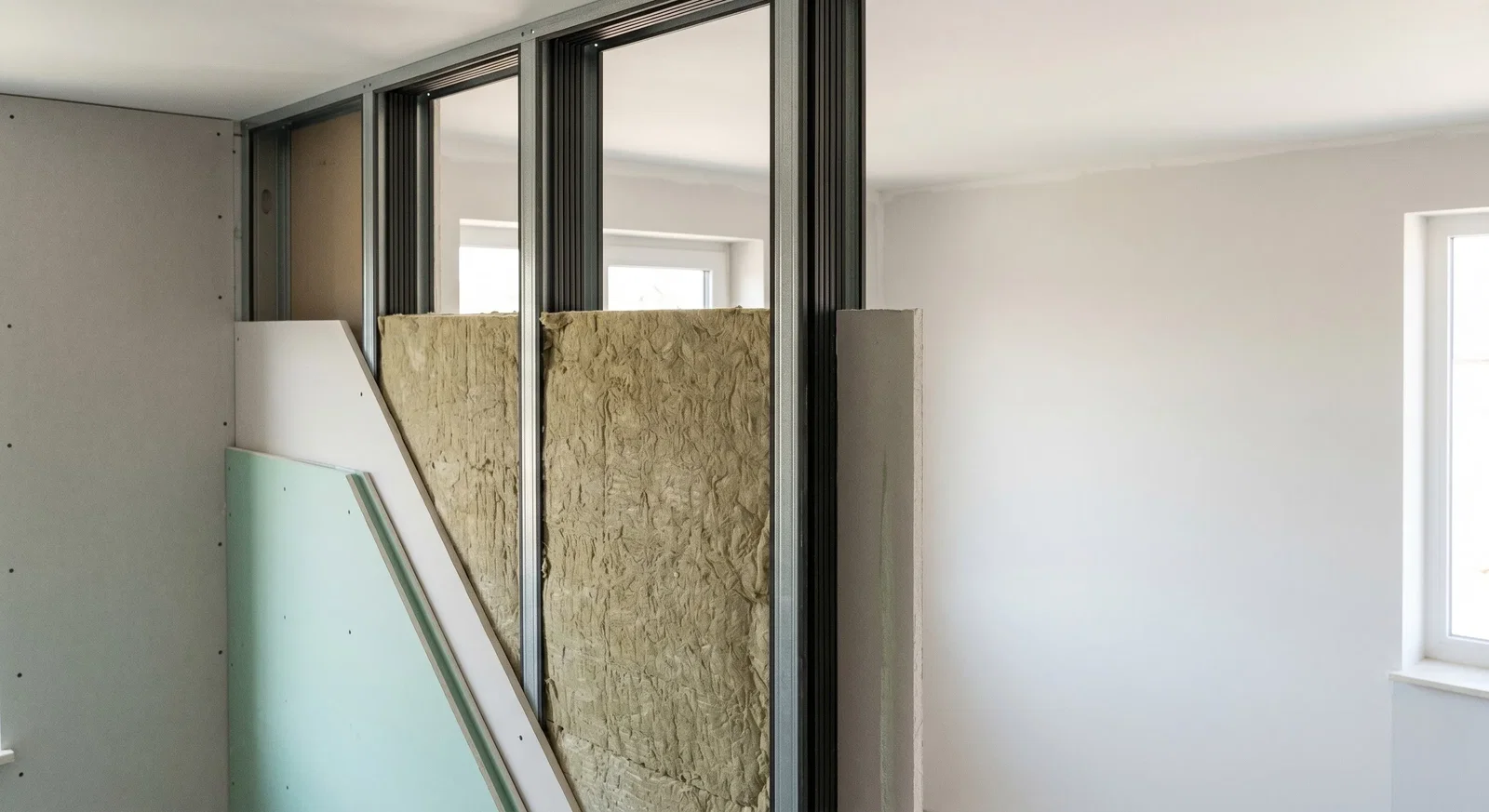
The Role of Drywall Profile in Sound Insulation: How to Increase Acoustic Performance
The Strategic Importance of Acoustic Comfort in Modern Architecture and Living Spaces
In the evolving landscape of 2026, technology and urbanization have made comfort—not just aesthetics—a priority in our living spaces. One of the most fundamental components of this comfort is undoubtedly sound insulation. Preventing noise from the outside environment or blocking sound transmission between neighboring rooms directly affects everything from mental health to work productivity. At HC Drywall Profile, we believe that sound insulation is not a luxury but an indispensable engineering requirement for modern structures. Acoustic performance is the process of controlling sound energy within a building, and the drywall profiles used in this process form the skeleton of the insulation system, determining its foundational performance. A correctly configured profile system is the first and most critical barrier needed to break the transmission of sound waves.
The Transmission Mechanism of Sound Waves and the Function of Metal Profile Systems
Sound travels through the air or across solid materials in the form of vibrations. Sound insulation within a structure aims to minimize the transition of these vibrations from one surface to another. In drywall systems, metal profiles are the primary elements providing the physical connection between two surfaces. If this connection is too rigid and inflexible, the profile acts as a "sound bridge," transmitting vibrations directly to the other side. HC Drywall Profile systems are produced with a specific balance of flexibility and durability, designed to help dampen sound waves as they travel across the metal. The density of the metal and the form of the profile are parameters that affect the speed of sound propagation in solid media; therefore, selecting the right profile is the first step in mathematically optimizing acoustic performance.
Special Profile Forms and Design Parameters That Enhance Acoustic Performance
Beyond standard drywall profiles, profile forms specifically designed for acoustic purposes are revolutionizing sound insulation. In particular, indentations and protrusions in the web structure of the profile lengthen the path sound waves must take through the solid medium, breaking their energy. Special channel structures developed in the HC Drywall Profile R&D center aim to reduce the Sound Transmission Class (STC) while maintaining the structural rigidity of the profile. As the thickness of the profile (gauge) increases, its mass also increases; according to the law of mass, heavier surfaces insulate sound better. However, mass alone is not enough; the asymmetrical design of the profile or perforated web structures plays a vital role in blocking sound at specific frequency bands by altering resonance frequencies.
Creating Maximum Sound Barriers with Double-Stud Wall Systems
In cinema halls, recording studios, or luxury housing projects requiring the highest level of sound insulation, the "double-stud" method is applied. In this system, two separate wall skeletons are installed side-by-side without physically touching each other. In this method, which utilizes HC Drywall Profile products, the air gap between the two profile lines acts as the most effective insulator. The sound wave hits the first drywall surface, is partially dampened in the profile skeleton, then loses energy in the air gap before reaching the second independent profile system. This "decoupling" technique can increase sound transmission loss by more than 50% when the metal profiles do not touch each other.
The Vibration-Damping Effect of Acoustic Tape in Profile Installation
The points where the profile meets the floor, ceiling, and side walls are as risky as the profile itself for sound insulation. If an HC Drywall Profile metal surface is screwed directly into a concrete floor, it carries the structural vibrations of the building to the wall surface. To prevent this, high-density acoustic insulation tapes must be placed between the profile and the contact surfaces. These tapes break the mechanical bond between the metal profile and the structure, acting as a "suspension." Elastomeric materials laid under the profile prevent impact sounds and structural noise from being transferred to the wall, raising the total acoustic performance of the system by 3 to 5 decibels (dB).
The Synergistic Harmony of Profile Depth and Insulation Infill
The depth of the profile used (e.g., 50mm, 75mm, or 100mm) determines the thickness of the insulation material (such as rock wool or glass wool) to be placed between the profiles. The "Mass-Spring-Mass" principle is fundamental in sound insulation. Here, the drywall represents the mass, while the insulation material and air gap between the profiles represent the spring. The wide range of profile options offered by HC Drywall Profile allows the "spring" to be spread over a larger distance, ensuring that even low-frequency sounds are absorbed. As profile depth increases, the insulation capacity for low frequencies (bass sounds) increases. Insulation applications made without selecting the correct profile depth are among the biggest mistakes that cause a system to fall below its potential performance.
Mechanical Advantages of Flexible Profile Systems and Resilient Clips
In some advanced applications, profiles are mounted using flexible resilient clips or acoustic hanging apparatus instead of being fixed directly to the main structure. These systems allow the HC Drywall Profile skeleton to "float" completely away from the structure. These flexible connections, especially used in ceiling applications, are unrivaled in cutting out heel clicks from the floor above or the noise of furniture being dragged. The compatibility of the metal profile with such apparatus and its ability to withstand the stresses that may occur during assembly guarantees the long life and efficiency of the system. Mechanical decoupling is the most advanced method used in acoustic engineering to stop sound transition.
The Effect of Profile Spacing on the System's Resonance Frequency
The installation frequency of drywall profiles (stud spacing) is generally set at 40 cm or 60 cm. From an acoustic perspective, placing profiles too frequently increases the rigidity of the wall but also creates more paths through which sound can be transmitted. The optimum spacing specified in HC Drywall Profile application guides provides the ideal balance between the static safety of the wall and its acoustic performance. A flexible wall is more successful at dampening sound than a stiff one. Calibrating profile spacing according to the acoustic needs of the project can target and block the transition of sounds in specific frequency ranges, such as speech or music.
Contribution of Gauge Thickness and Galvanization Quality to Acoustic Durability
Acoustic performance is measured not only by values at the moment of installation but by the system's ability to maintain its form over the years. Profiles with low quality or sub-standard thickness can stretch over time, loosen from screws, and create gaps in the system. Sound is like a fluid that can leak through even the smallest gap. High-quality galvanized steel profiles produced by HC Drywall Profile maintain the rigidity and integrity of the system for decades. The homogeneous structure of the steel ensures that sound waves are regularly propagated and dampened along the profile, preventing regional performance losses.
Load Capacity of the Profile in Multi-Layer Drywall Applications
To increase mass in sound insulation, two or three layers of drywall are usually applied to both sides of the profile. This significantly increases the load on the profile system. HC Drywall Profile products possess the static strength to carry these heavy loads without stretching. In multi-layer applications, staggering the board joints eliminates sound-leaking seams. The screw-holding power of the profile and its ability to grip the boards tightly prevent air gaps between layers, ensuring the system moves as a whole and meets sound like a solid barrier.
Acoustic Sealing Strategies in Corner and Joint Details
The corners where walls meet ceilings and side walls are the points where the risk of "acoustic leakage" is highest. Metal profiles must be cut with precise miters and mounted without gaps at these junctions. HC Drywall Profile corner accessories and finishing profiles help solve these details perfectly. To prevent squeaking sounds caused by friction where metal touches metal and to cut off air passage, it is essential to support the profile system with acoustic mastic applications at joint points. It must be remembered that a sound insulation system is only as strong as its weakest link; therefore, meticulousness in profile joints determines total efficiency.
Acoustic Planning of Installation Gaps and Profile Placement
Electrical cables, socket boxes, or water pipes passing through the wall create weak points in sound insulation. When the metal profile skeleton is being established, the placement of installation elements must be planned so as not to disrupt acoustic performance. Factory-made cable holes on HC Drywall Profile products facilitate installation passages while maintaining the profile's strength and acoustic balance. Ensuring that socket boxes are not placed back-to-back and positioning profiles to surround installation elements are critical application details to prevent sound from "flanking" from one side of the wall to the other.
Profile Systems in Suspended Ceilings and Sound Absorption Coefficients
Profile selection determines acoustic comfort in suspended ceilings just as much as in partition walls. Ceiling profiles must prevent the gap above the ceiling (the plenum area) from turning into an echo chamber. HC Drywall Profile ceiling systems safely carry insulation boards while minimizing air movement and sound reflection in the ceiling cavity. Profile skeletons used with perforated or acoustic drywalls increase the Noise Reduction Coefficient (NRC), lowering the reverberation time within the room. This is the most important factor in increasing speech intelligibility, especially in offices and classrooms.
Acoustic Optimization with AI and Software-Assisted Profile Designs
2026 construction technologies allow for the optimization of profile designs through computer simulations. HC Drywall Profile products are developed by testing how they will dampen sound at which frequency using digital twins even during the production phase. Software analyzes the effects of millimetric changes in the profile's geometry on sound transmission loss. In this way, innovative profiles that offer higher acoustic performance with less material are being developed. Future structures will offer much lighter but much quieter living spaces thanks to these smart profile designs.
Sustainability and the Ecological Dimension of Acoustic Performance
Modern sound insulation solutions must also be environmentally friendly. All metal systems produced as HC Drywall Profile are made from recyclable steel, and their longevity reduces the need for renovation. Good sound insulation also contributes indirectly to energy efficiency, as the multi-layer structures and inter-profile insulation used also bring thermal insulation. Increasing acoustic comfort while protecting the ecological balance is a fundamental part of our brand's vision. A quieter world also means a more peaceful and sustainable future.
Conclusion: Metal Profiles, the Unsung Heroes of Acoustic Success
Although drywall boards or insulation wools are usually the first materials that come to mind when sound insulation is mentioned, the actual element that determines and sustains the performance of this entire system is the metal profile skeleton. An HC Drywall Profile system, selected correctly, produced from qualified steel, and installed according to engineering rules, takes on the most critical role in bringing sound under control. Acoustic performance is a whole, and metal profiles form the most strategic part of that whole. Setting the skeleton correctly is the only way to achieve the peace of silence in your living spaces. HC Drywall Profile continues to provide the reliable foundation of silence and quality in every project.