
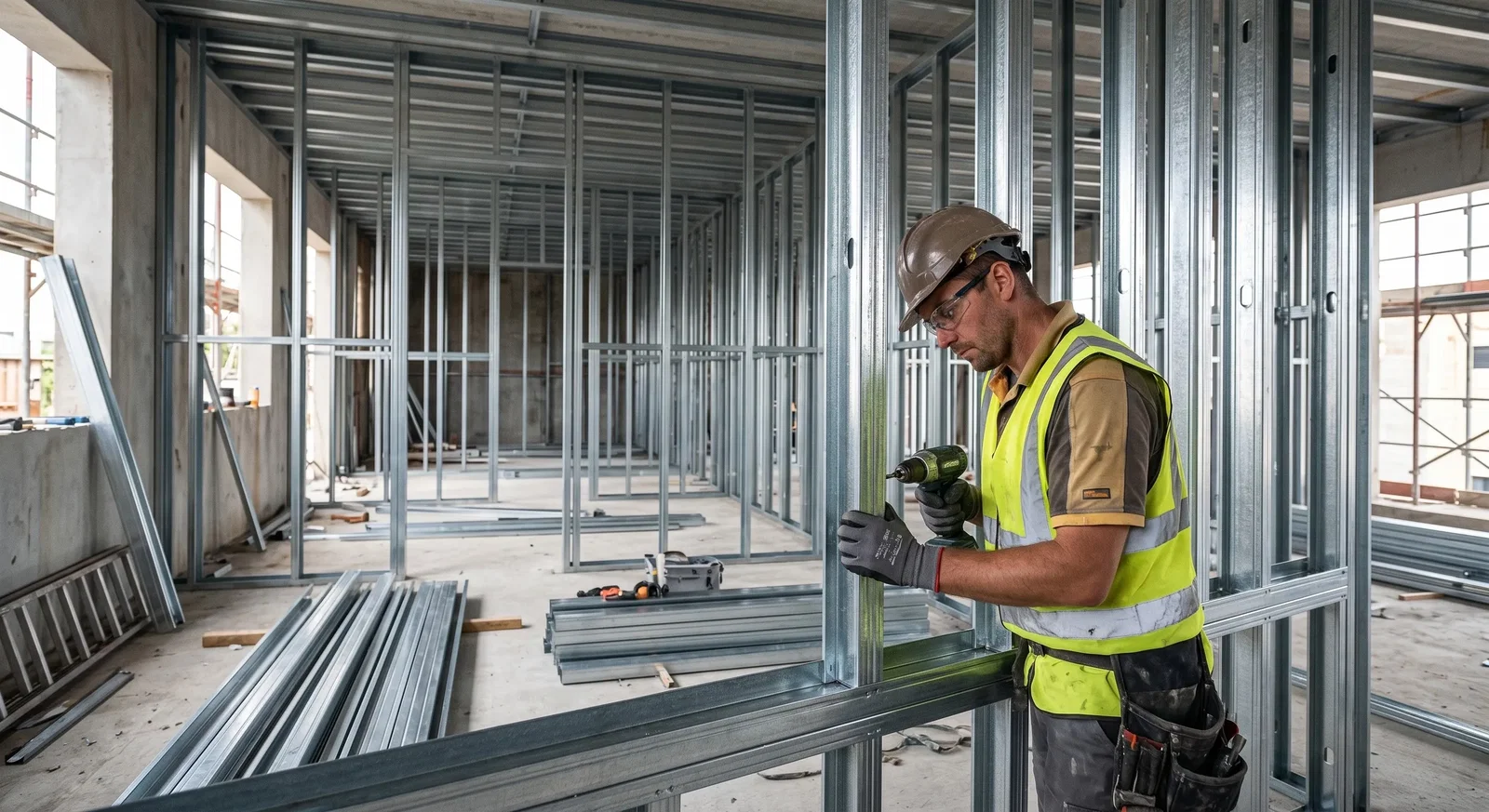
Use of profiles in lightweight steel structures: cost advantages compared to conventional methods.
The Transformative Role of Light Gauge Steel Systems in Modern Construction
As of 2026, the construction industry is undergoing a massive shift centered on speed, sustainability, and cost efficiency. Traditional reinforced concrete and heavy steel structures are increasingly being replaced by light gauge steel (LGS) systems, which offer superior flexibility and economy. At HC Drywall Profile, we closely monitor the advantages provided by light gauge steel profiles, which serve as the backbone of structures from framing to partition walls. LGS structures are systems built using cold-formed galvanized steel profiles, offering high earthquake resistance and remarkably short assembly times. Compared to traditional methods, the cost advantages of these systems are not limited to material prices but form a chain of economic returns that last throughout the entire lifecycle of the project.
Massive Savings in Foundation Costs Compared to Reinforced Concrete
One of the most distinct advantages of light gauge steel structures over traditional reinforced concrete buildings is the significantly lower total weight of the structure. The dead load of a reinforced concrete building is approximately 5 to 10 times greater than that of a light gauge steel building. This reduction in weight means the load transmitted to the ground is diminished, which opens the door to massive savings in foundation design. In a building constructed with high-strength, thin-walled profiles manufactured by HC Drywall Profile, raft or continuous foundations with less depth and less reinforcement are often sufficient. Reducing soil improvement costs and concrete consumption is a critical financial parameter that protects the budget from the very beginning of the project.
Shortened Construction Time and the Advantage of Early Investment Return
In traditional reinforced concrete construction, the time spent waiting for formwork, rebar tying, and, most importantly, the curing of concrete can extend project delivery dates by months. In light gauge steel structures, however, profiles are manufactured with millimetric precision in the factory and brought to the site as ready-to-install panels. Supported by the logistical strength of HC Drywall Profile, this process shortens construction time by 50% to 70% compared to traditional methods. In commercial projects, hotels, or housing developments, having a building operational months earlier means early rental income or business commencement. In a construction economy where time is money, this speed advantage minimizes financing costs and interest burdens, returning directly as profit to the investor.
Decrease in Labor Expenses Through Industrial Assembly Efficiency
Traditional construction sites carry high labor costs due to the need for a large number of skilled workers and intense physical labor. Because light gauge steel systems operate on a "click-in" or "assembly" logic, they allow for much larger areas to be covered with fewer personnel. The ease of assembly provided by HC Drywall Profile systems reduces the margin of error on-site and eliminates "re-work" costs. Since the profiles are joined with smart screw systems rather than on-site welding, the need for high-paid certified welders is reduced. This efficiency, brought to the field through industrial production discipline, significantly lowers the share of labor within the total budget.
Economic Ease Brought by Lightness in Shipping and Logistics
Massive logistical operations required for heavy steel or reinforced concrete make shipping costs one of the heaviest burdens of a project. Light gauge steel profiles, thanks to their nestable forms and lightweight structures, allow thousands of square meters of profiles to be transported in a single truck. HC Drywall Profile minimizes the impact of logistics costs on unit prices by shipping products using compact packaging methods. Using fewer vehicles during transport not only saves fuel but also shortens the rental periods for cranes and heavy machinery during on-site distribution. Lightness is a hidden hero that lowers costs at every step from the factory to the assembly point.
Near-Zero Material Waste and Resource Management
In traditional construction, a material waste rate of around 10-15% is considered normal due to cut rebars, broken bricks, and spilled mortar. However, light gauge steel structures are managed through computer-aided design (CAD) and manufacturing (CAM) systems. In HC Drywall Profile factories, profiles produced to specific project dimensions result in a waste rate that is nearly zero. Since the location and measurement of every profile are predetermined, there is no cutting or trimming on-site, and thus no waste generation. This not only saves on material but also eliminates the costs of excavation and waste removal from the site, providing a double-sided contribution to the budget.
Ability to Work Independent of Weather Conditions and Prevention of Downtime Costs
Reinforced concrete construction is directly dependent on weather conditions, such as the risk of concrete freezing in extreme cold or the halting of formwork in heavy rain. Every day a site stops means the continuation of fixed expenses, from site manager salaries to tower crane rentals. Light gauge steel profiles, with their galvanized structures, can be assembled in all weather conditions. The corrosion resistance of HC Drywall Profile products allows the material to remain safely in external environments. Thanks to dry construction techniques, no work stoppages occur during seasonal transitions, ensuring adherence to cash flow plans and preventing unpredictable "downtime costs."
Earthquake Resistance and Long-Term Advantages in Insurance Costs
Due to their flexibility and lightweight properties, light gauge steel structures feel earthquake loads much less than heavy buildings. While the repair of structural damage after an earthquake in traditional heavy buildings can reach half the cost of the building, the risk of damage in LGS systems is minimized. This level of safety is also reflected in insurance premiums. Buildings constructed with a HC Drywall Profile skeleton fall into a safer category in risk analyses, lowering operational costs in the long run. This low-risk premium brought by structural safety is a strategic element that reduces the Total Cost of Ownership (TCO).
Operational Savings Through Energy Efficiency and Insulation Performance
The wall cavities created by light gauge steel profiles allow for the most efficient placement of insulation materials. While it is difficult to break thermal bridges in traditional brick or concrete walls, steel frame systems achieve excellent thermal insulation with high-performance rock wool and glass wool applications. HC Drywall Profile partition wall systems can reduce heating and cooling expenses by 30% to 50% compared to traditional buildings. A building's construction cost is paid once, but energy costs continue throughout its life. Light gauge steel is an investment tool that pays for itself through these savings during the operational phase.
Recyclability and Revenue from Sustainable Building Certifications
In the 2026 construction market, green building certifications such as LEED and BREEAM directly affect the market value of structures. Steel is the most recycled material in the world, and when light gauge steel structures are dismantled, the material can be 100% recovered. HC Drywall Profile provides raw materials for eco-friendly projects through sustainable production processes. While the demolition cost of traditional buildings is an expense item, the "end-of-life" process of a light gauge steel structure can turn into a revenue item thanks to the scrap value of the material. This sustainability vision provides exemption from carbon taxes and increases the building's prestige and marketability.
Area Efficiency and Sales Value Increase in Net Usable Space
In reinforced concrete buildings, the area occupied by load-bearing columns and thick walls creates large differences between the gross and net area of the building. Thanks to the high load-bearing capacity of light gauge steel profiles, the same static strength is achieved with much thinner walls. In a building constructed using HC Drywall Profile systems, net usable space can increase by 5% to 10% compared to reinforced concrete. In a 1000-square-meter project, an extra 50 square meters gained is a factor that directly increases project profitability based on sales prices. Saving on wall thickness is the smartest way to turn construction area into money most efficiently.
Modern Installation Integration and Ease of Maintenance
In light gauge steel structures, electrical and plumbing installations are easily passed through factory-punched openings on the profiles. Traditional methods involve costly and messy processes like breaking walls, opening channels, and then re-plastering. The installation holes on HC Drywall Profile products shorten assembly time and prevent material waste. In future maintenance and repair processes, modular interventions can be made without the need to completely demolish the wall. Ease of maintenance lowers the aging costs of the building and provides economic comfort to the owner in the long run.
Modularity and Flexibility in Future Expansion Projects
Enlarging a room or adding to a building in a traditional structure is a very expensive process that jeopardizes the static integrity. Light gauge steel structures, however, are very suitable for expansion and modification due to their modular nature. HC Drywall Profile frame systems allow for revisions to be made on the structure thanks to their screwed connections. A future floor addition or space expansion can be completed much faster and at a much lower cost than with reinforced concrete. This flexibility ensures the building's adaptation to changing needs, extending its economic life.
Financial Partnership in Urban Transformation and Rapid Housing Needs
In urgent housing needs or urban transformation projects, time is the greatest enemy of financing costs. The rapid installation of light gauge steel structures allows for healthier management of cash flow in public and private sector projects. HC Drywall Profile stabilizes costs with its standard production capacity in such mass housing moves. Completing an urban transformation project in 6 months with light gauge steel that would take 2 years with traditional methods lowers the rental aid costs for rights holders and minimizes the financial risks of the project.
Cost Assurance Provided by Standard Quality and Warranty Processes
In reinforced concrete construction, the quality of concrete can vary on-site depending on the air temperature during pouring or the use of vibrators. This uncertainty carries the risk of future structural errors and high repair costs. Light gauge steel profiles, however, are produced to a specific standard in a factory environment. The certified products we offer as HC Drywall Profile guarantee that the mechanical properties of the material are the same at every point. Standard quality eliminates surprise costs and creates financial assurance by ensuring engineering calculations are 100% realized on-site.
Conclusion: Building the Economic Structures of the Future with HC Drywall Profile
Light gauge steel systems are a modern engineering marvel that eliminates the clunkiness and high hidden costs of traditional construction methods. From foundation costs to energy savings, labor efficiency to recycling value, the advantages offered at every stage make light gauge steel the indispensable building system of 2026 and beyond. As the HC Drywall Profile brand, we are the strongest supporter of this economic transformation with our high-quality galvanized profile production. Choosing light gauge steel systems to escape the cost burden of traditional methods and produce more profitable, fast, and safe projects is not just a construction decision, but a strategic financial move. With our solutions that combine quality with economy, we continue to add value to your projects.